Pages

Showing posts with label self help. Show all posts

Saturday, September 26, 2026

Overwhelmed: Ways to Take the Pressure Off

I've been feeling very overwhelmed by life lately, so I thought that Claudia Hammond's Overwhelmed: Ways to Take the Pressure Off would be the perfect read to help me out. The endorsement by Daniel H. Pink on the cover even said: "Lowers you pulse as you read it" - exactly what I'm looking for!

Hammond breaks the topic into three big parts: part 1 is acceptance, covering things like perfectionism, a never-ending to-do list (and why it will never end), and how not all stress is bad for you. Then she details next steps in part 2, covering things like how to stop the news from overwhelming you, procrastination, and other people's standards. Finally, she looks at the bigger picture in part 3 with topics like nostalgia, how to worry less, and reaching a flow state. She also lists the key points of each chapter at the end of the chapter (though there wasn't a key point page for the chapter on worry, which was unfortunate - that chapter was almost completely different practical tips you could try to reduce worry in your own life, and a one page review would have been helpful).

I honestly found Overwhelmed to be a bit of a slog to read through. It reads a lot more like a literature review than a self-help book or a book of practical tips (though I felt like there were more tips in the third part of the book). And a lot of what she talked about didn't feel relevant to my life. At times I felt more overwhelmed just reading the book, especially when my mind kept wandering and I had to reread sentences over and over again to follow them. I considered stopping reading, but I was already over halfway through the book at that point; I decided to persevere in the hopes that I might get one or two more tips out of the book before reaching the end (which I thankfully did - like I already said, I found the last part of the book the most helpful).

Needless to say, I didn't really enjoy reading Overwhelmed, and am thankful I can go start something else now. 

Tuesday, July 28, 2026

The Urban Monk: Eastern Wisdome and Modern Hacks to Stop Time and Find Success, Happiness, and Peace

I found The Urban Monk: Eastern Wisdome and Modern Hacks to Stop Time and Find Success, Happiness, and Peace by Pedram Shojai at the perfect time. Life has been incredibly stressful these last few years, throwing one thing after another at me (most recently: wildfires). So I welcomed a nonfiction book that I don't even remember putting on hold showing up to hopefully help me with stress management.

The Urban Monk looks at nine common areas that cause people in the modern world problems, including stress, time management, sleep, and money. Shojai examines each problem and uses his views as both a trained monk and a doctor of Chinese medicine to offer solutions. He then further provides "modern hacks" - things that people in the modern Western World can do now to help break the cycle of each problem. Each chapter also starts and ends with a case study, which is based off of real people that Shojai has helped.

Overall, I really enjoyed reading through The Urban Monk. I found Shojai's suggestions helpful and would really like to try them at length. I thought the book was good for a beginner like me (while I'm familiar with some of the things Shojai talks about, I've never really practiced them in real depth or for long). But at times the book does get a little repetitive-sounding. He doesn't so much repeat himself, as offer similar suggestions for different problems (he provides different meditations to try, or suggests different herbs that are helpful). The structure of each chapter is the same as well, so that adds to the repetition (and might turn you off of reading it if you don't like structural repetition like that). His word choice was also a little off-putting at times in that he uses a lot of colloquial language and swears, which seem at odds with the subject matter (but he definitely wasn't as off-putting as I found Chris Crowley in Younger Next Year). I think The Urban Monk is definitely worth the read if you are stressed out by modern life and looking for a new way of thinking about and approaching what life can be like instead.

Saturday, May 31, 2025

Small Move, Big Change: Using Microresolutions to Transform Your Life Permanently


I almost returned Caroline L. Arnold's Small Move, Big Change: Using Microresolutions to Transform Your Life Permanently to the library unread. I'd taken out a few self-help books around the same time that were all along the same lines (transforming your life for the better), read a bit, then ultimately sent them back. But something stopped me with Small Move, Big Change. And whatever it was, I'm glad it did!

Small Move, Big Change is all about transforming your life by slowly changing your habits. A lot of your behaviour runs on autopilot, or through habit, as Arnold explains. So when you try to make a big sweeping change, you run up against that autopilot, eventually succumbing back to those habits you always use (this is specifically due to the limited amount of energy your willpower and decision making capability have per day; each time you decide to do something counter to these auto-behaviours, you use some of your will power up until you have nothing left). By targeting small, select behaviours with microresolutions (small resolutions that have instant gratification because they are so small, it's much easier to follow through with them), you can, over time, change your habits by making new ones, which in turn will change your life.

I felt like a lot of this idea was also in Atomic Habits (though this book predates Atomic Habits, so maybe Clear got some ideas from Arnold?) But I really liked how Arnold packaged this. The first part of the book explains the whole process of setting microresolutions, and the rest of the book shows examples in action in different parts of your life (sleep, fitness, diet/nutrition, clutter, relationships, spendig, punctuality, and organization). You honestly don't even really need to read the second part of the book, as you get everything you need from the first part. But there are some interesting ideas based off of examples from the author's life (and from some of her clients and friends). I honestly already started a couple in my own life as I was reading this book (and believe me, as you read it, you get so many ideas for things you can try, it's very hard to limit yourself to the two that Arnold recommends at a time!)

While I was reading Small Move, Big Change, I was honestly struck by how Arnold's method felt like the missing piece in my own attempts at self-improvement and goal setting. I was very impressed with the microresolution method, and I hope it helps me in my own life!

Sunday, March 7, 2021

Atomic Habits: An Easy & Proven Way to Build Good Habits and Break Bad Ones


Atomic Habits
by James Clear was recommended to me....somewhere.  I don't honestly remember where I heard about it, but I heard it was a really good read so I got it from the library to give it a try.

Clear breaks down a habit into four parts: cue, craving, response, and reward (which he adapted from Charles Duhigg's book The Power of Habit).  He uses these parts to look at designing good habits (making the habit obvious, attractive, easy, and satisfying) or to break a bad habit (you do the reverse: make it invisible, unattractive, difficult, and unsatisfying). The bulk of the book looks at all of these parts in greater detail.  Clear's writing is really accessible, and he makes all of this sound straightforward and easy (but of course, reading the book is only the prep work - you still need to put in the harder worker of actually using everything you learn!)

While I enjoyed the majority of the book, I will admit that Clear lost me at the very end (in the final "Advanced Tactics" section).  I thought it was me, that I pushed myself a little too hard to finish the book today (I had been reading a section a night, but then today pushed through a few sections to finish); I was also fairly tired today, which didn't help.  But it looks like other people have taken issue with the end section too, so perhaps it wasn't just my tired brain?

Either way, the bulk of this book is solid.  Clear beautifully demonstrates how always seeking to improve by just 1% can compound over time and deliver great results to your life.  And his framework is the perfect way to help you build the healthy habits that will aid you in achieving your goals.

___

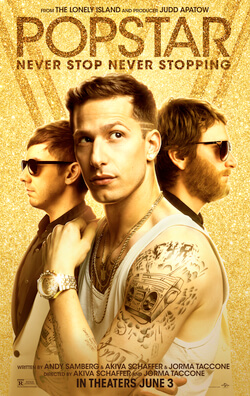
As a side note, I'd also like to mention that the end of Clear's book made me think of the tag line from Popstar: "Never Stop Never Stopping."  Never stop learning and striving to improve your life! :)


Friday, June 7, 2019

The One Thing: The Surprisingly Simple Truth Behind Extraordinary Results

I saw The One Thing: The Surprisingly Simple Truth Behind Extraordinary Results and wanted to know what the one thing was.  Gary Keller's advice turns out to simply be that you focus on your one important thing, whatever that is.  Make time for it, practice it daily, and think outside the box to master it, and you will be on your way to living your own version of an extraordinary life.

I honestly don't have a whole lot to say about this book.  His advice is simple, yet much like JL Collins' The Simple Path to Wealth, The One Thing's advice is difficult to implement.  Keller recommends you make a daily commitment (or time block) to work on your one thing; that time block should be 4 hours at a minimum.  Over the course of a year, the four hours a day works out to the approximate hours you need to dedicate to a skill to master it; presumably if you blocked less time (like say two hours), it would take you more time to master said skill. 

Then you have to guard against losing this time block to various time thieves.  This isn't impossible, but it will be difficult to begin with (especially during the average of 66 days it takes to create a new habit according to the research Keller has done for this book). 

Keller provides some good motivation (and some excellent quotes from other people).  I think this is a good book to read if you're struggling with dedicating your time towards what matters most for you.  He also provides some excellent information on setting boundaries (ie saying no to other things).  Overall, I think this is a fine book on the topic, although I did have a hard time finishing reading it once I figured out exactly what his message was (I know part of the problem was that I wanted to stop to go work on my one thing!) ;)

Friday, May 24, 2019

You Are a Badass at Making Money: Master the Mindset of Wealth

When I read about You Are a Badass at Making Money by Jen Sincero (and decided that I wanted to read it), I didn't really get that it was a self-help book.  I thought it was going to be more of a personal finance book like Beat the Bank or Worry Free Money.  But it really isn't.  You Are a Badass at Making Money is very much a self-help book, dedicated to giving you the tools you need to work with the Universe to attract wealth into your life. So consider yourself warned: this book has nothing to do with investing or getting out of debt.

So with that disclaimer out of the way, I found You Are a Badass at Making Money to be a rather interesting book.  It is dedicated to helping you change your attitude towards money; don't think of money as an evil entity ("money is the root of all evils"), but more as a partner.  Sincero defines money as a currency, which has its own energy; she says you have to actively work to attract it rather than risk repelling it with your preconceived attitude towards it. Of course, your attitude isn't all you need; you will also need to put in the hard work to reach your goals.  But once your attitude has changed, the Universe will work with you, sending you opportunities to help you reach your goals.  At the end of each chapter, there's some homework for you to complete, helping you work your way through your own mindset, and a mantra (that generally starts with "I love money because___").  While most of the book is squarely dedicated to helping you manifest more material wealth in your life, there are some areas that look at your life as a while (like encouraging you to meditate and just generally be a better person). 

I will admit that I wasn't a fan of Sincero's slang.  I get that it's probably her thing (I didn't read You Are a Badass but I imagine it has much the same language).  But I found it often kind of came out of nowhere in sentences and knocked me out of the reading.  I think it's also going to really date the book in the future.  But that's just my opinion.  You Are a Badass is a New York Times Bestseller, so clearly many other people do not feel the same way.

All in all, I found that Sincero's book really made me reflect on my own life, which I think is a really good thing.  If you're okay with the slang, I definitely recommend giving it a read.

Sunday, March 10, 2019

Feel the Fear...and Do It Anyway

A friend of mine was giving away free books and I took them because I really like books.  The free books ended up being self-help books, and I figured that after taking them I should probably read them.  So I started with Susan Jeffers' Feel the Fear...and Do It Anyway.

The premise of the book is that everyone feels fear when trying new things.  But successful people don't let that fear stop them - they feel the fear but do whatever it is anyway, learning and growing from the experiences. 

The first few chapters were great, following along with this premise.  The later ones started getting a bit harder to follow though, as the book moved away from talking about fear and more towards talking about your higher self.  I had a hard time getting through the book as a result (I almost didn't finish it just because I was really losing interest in it).  It was also a bit difficult to rate on Goodreads - originally I would have rated it higher than the rating I ended up deciding on.  It's too bad because the first few chapters were rather interesting.

I did take a few notes though from the book, so overall I don't regret reading it.