Pages

Showing posts with label nonfiction. Show all posts

Saturday, September 26, 2026

Overwhelmed: Ways to Take the Pressure Off

I've been feeling very overwhelmed by life lately, so I thought that Claudia Hammond's Overwhelmed: Ways to Take the Pressure Off would be the perfect read to help me out. The endorsement by Daniel H. Pink on the cover even said: "Lowers you pulse as you read it" - exactly what I'm looking for!

Hammond breaks the topic into three big parts: part 1 is acceptance, covering things like perfectionism, a never-ending to-do list (and why it will never end), and how not all stress is bad for you. Then she details next steps in part 2, covering things like how to stop the news from overwhelming you, procrastination, and other people's standards. Finally, she looks at the bigger picture in part 3 with topics like nostalgia, how to worry less, and reaching a flow state. She also lists the key points of each chapter at the end of the chapter (though there wasn't a key point page for the chapter on worry, which was unfortunate - that chapter was almost completely different practical tips you could try to reduce worry in your own life, and a one page review would have been helpful).

I honestly found Overwhelmed to be a bit of a slog to read through. It reads a lot more like a literature review than a self-help book or a book of practical tips (though I felt like there were more tips in the third part of the book). And a lot of what she talked about didn't feel relevant to my life. At times I felt more overwhelmed just reading the book, especially when my mind kept wandering and I had to reread sentences over and over again to follow them. I considered stopping reading, but I was already over halfway through the book at that point; I decided to persevere in the hopes that I might get one or two more tips out of the book before reaching the end (which I thankfully did - like I already said, I found the last part of the book the most helpful).

Needless to say, I didn't really enjoy reading Overwhelmed, and am thankful I can go start something else now. 

Tuesday, July 28, 2026

The Urban Monk: Eastern Wisdome and Modern Hacks to Stop Time and Find Success, Happiness, and Peace

I found The Urban Monk: Eastern Wisdome and Modern Hacks to Stop Time and Find Success, Happiness, and Peace by Pedram Shojai at the perfect time. Life has been incredibly stressful these last few years, throwing one thing after another at me (most recently: wildfires). So I welcomed a nonfiction book that I don't even remember putting on hold showing up to hopefully help me with stress management.

The Urban Monk looks at nine common areas that cause people in the modern world problems, including stress, time management, sleep, and money. Shojai examines each problem and uses his views as both a trained monk and a doctor of Chinese medicine to offer solutions. He then further provides "modern hacks" - things that people in the modern Western World can do now to help break the cycle of each problem. Each chapter also starts and ends with a case study, which is based off of real people that Shojai has helped.

Overall, I really enjoyed reading through The Urban Monk. I found Shojai's suggestions helpful and would really like to try them at length. I thought the book was good for a beginner like me (while I'm familiar with some of the things Shojai talks about, I've never really practiced them in real depth or for long). But at times the book does get a little repetitive-sounding. He doesn't so much repeat himself, as offer similar suggestions for different problems (he provides different meditations to try, or suggests different herbs that are helpful). The structure of each chapter is the same as well, so that adds to the repetition (and might turn you off of reading it if you don't like structural repetition like that). His word choice was also a little off-putting at times in that he uses a lot of colloquial language and swears, which seem at odds with the subject matter (but he definitely wasn't as off-putting as I found Chris Crowley in Younger Next Year). I think The Urban Monk is definitely worth the read if you are stressed out by modern life and looking for a new way of thinking about and approaching what life can be like instead.

Tuesday, March 10, 2026

Can't Even: How Millennials Became the Burnout Generation

I, like many people nowadays, have been feeling super burnt-out by like everything. So when I stumbled on Anne Helen Petersen's Can't Even: How Millennials Became the Burnout Generation, I was hoping it would be helpful, shedding light on why I feel this way.

Well, the short answer is that life sucks for everyone (particularly in the United States, which is where Petersen lives and is writing about). I thought this book was really good at showing how things have changed over time for everyone (not just millennials): companies have reduced good salaried jobs in favour of hiring more temp workers (aka freelancers), everyone is expected to work more and more hours (and that corresponds to less and less leisure time), people are afraid they will socially move downwards (out of the middle class), and, thanks to social media, people are now performing their lives rather than actually living them. But I thought the book was less good at showing how any of this was specific to millennials. Sure, many millennials were trying to start work during the 2008 recession, making it very difficult to make money, especially when many of them were struggling with student debt. And some millennials (younger ones in particular - this was not at all my experience) were raised in heavily scheduled ways, where everything they did was organized and often in hopes of being a good point for a college application. But these are things that are transcending any one generation. Millennials are parenting their own children in the same way. People of other generations had difficulties finding jobs in the recession. College tuition is even more expensive now than it was when millennials were attending, so younger generations will have even bigger debts. So, while I found this to be a largely informative read regarding the history of jobs in America over the last forty or fifty years, that was all it really was. The book also offers little in the way of solutions (the final chapter admits as much), which is rather unfortunate; it might have served as a rallying cry had there been more than just historical fact.

While, in some ways, I didn't really relate to the things Petersen was specifically mentioning, being an older millennial from Canada, I will admit that there were some areas of the book that really made me stop and consider my own life. One that particularly stood out to me was how everyone seems to feel pressure to monetize their hobbies (which was also kind of top of mind for me after watching Ryan George's video on the same topic just a few days before reading the chapter) instead of just enjoying them. That really made me stop and think.

So if you're looking for an interesting primer on how the working world has changed over the last few decades (particularly in corporate America), while a bit depressing, Can't Even is worth the read. 

Though I will admit, I was annoyed at the grammatical errors in the book - there were a number of places where there were extra words, making sentences a little nonsensical on first read.

Friday, July 11, 2025

Heartwork Journaling: Play with a Purpose

I stumbled on the idea of Heartwork Journaling a little while ago, I believe as an e-course. I didn't really want to sign up for it, but I discovered that the creator, Maritza Parra, had created a book, Heartwork Journaling: Play with a Purpose. So I decided to give that a read to see what this idea was all about. I've been journaling on and off for a few years now, so I thought this practice would be worth checking out. :)

The idea of Heartwork Journaling is that you use art to better uncover the feelings that you are dealing with, to both work through them and help you create a good life through self care and creativity. The main idea Parra reiterates all through the book is that your art doesn't have to be perfect or even pretty - it's 100% fine if the art you make is messy and something that you don't want to show anyone! She recommends getting a book of watercolour paper, watercolour paints, and some markers for outlining and writing on the pages (though near the end of the book she also mentioned using crayons or markers as an alternative, so that was nice to see). The book is made up of a bunch of lessons that I think are to get you started with Heartwork Journaling, though I'm not really sure....the lessons seemed to be kind of one-off art projects, and nothing really seemed to build off of previous lessons. There are some journaling prompts in most of the lessons as well to get you to reflect on emotions and other areas of your life (for example, boundaries and relationships). 

While I like the idea of Heartwork Journaling, I didn't really connect to it in the book. I didn't connect with the idea of being a divine scientist, and found the book overall too structured (in that I wasn't really interested in doing any of the lessons). I did find some helpful journal prompts though, so that was great.

I'll also admit, I wandered to the dollar store part way through reading this book, but I couldn't find anything I would call "watercolour paper," so I didn't really have any of the materials to follow the lessons in watercolour anyway. I have pencil crayons and could give those a try, but the whole idea really felt made for watercolour paints (they can kind of blend and bleed together in your art; pencil crayons or markers wouldn't really). 

While I am grateful for some of the prompts I discovered in Heartwork Journaling: Play with a Purpose, I'm not sure how much I will use a lot of the concepts in this book. But I also think it's worth checking out and deciding for yourself on how you feel about the idea. :) 

Saturday, May 31, 2025

Small Move, Big Change: Using Microresolutions to Transform Your Life Permanently


I almost returned Caroline L. Arnold's Small Move, Big Change: Using Microresolutions to Transform Your Life Permanently to the library unread. I'd taken out a few self-help books around the same time that were all along the same lines (transforming your life for the better), read a bit, then ultimately sent them back. But something stopped me with Small Move, Big Change. And whatever it was, I'm glad it did!

Small Move, Big Change is all about transforming your life by slowly changing your habits. A lot of your behaviour runs on autopilot, or through habit, as Arnold explains. So when you try to make a big sweeping change, you run up against that autopilot, eventually succumbing back to those habits you always use (this is specifically due to the limited amount of energy your willpower and decision making capability have per day; each time you decide to do something counter to these auto-behaviours, you use some of your will power up until you have nothing left). By targeting small, select behaviours with microresolutions (small resolutions that have instant gratification because they are so small, it's much easier to follow through with them), you can, over time, change your habits by making new ones, which in turn will change your life.

I felt like a lot of this idea was also in Atomic Habits (though this book predates Atomic Habits, so maybe Clear got some ideas from Arnold?) But I really liked how Arnold packaged this. The first part of the book explains the whole process of setting microresolutions, and the rest of the book shows examples in action in different parts of your life (sleep, fitness, diet/nutrition, clutter, relationships, spendig, punctuality, and organization). You honestly don't even really need to read the second part of the book, as you get everything you need from the first part. But there are some interesting ideas based off of examples from the author's life (and from some of her clients and friends). I honestly already started a couple in my own life as I was reading this book (and believe me, as you read it, you get so many ideas for things you can try, it's very hard to limit yourself to the two that Arnold recommends at a time!)

While I was reading Small Move, Big Change, I was honestly struck by how Arnold's method felt like the missing piece in my own attempts at self-improvement and goal setting. I was very impressed with the microresolution method, and I hope it helps me in my own life!

Saturday, March 29, 2025

Seeking Serenity: The 10 New Rules for Health and Happiness in the Age of Anxiety


I've been pretty stressed over the last year or so, so I decided to give Amanda Enayati's book Seeking Serenity: The 10 New Rules for Health and Happiness in the Age of Anxiety a try. I was expecting a book about reducing stress, but that's not really what Seeking Serenity is about. Instead, the book is aimed more at changing your outlook on stress: stress can be a big motivator, helping you get things done, learn, and grow; it isn't the big bad force we all think it is (though Enayati does concede that chronic stress is still bad for you).

After the introduction, Seeking Serenity breaks its ten rules down into four areas of life: your world (rules 1-4, Be Resilient, Belong, Be Creative, and Be Free), your mind (Be Happy, Be Giving, Be Kind), your body (Be Healthy, Be Uncluttered), and world, mind, and body (Be Present). None of these rules are really groundbreaking; we are social beings who get a lot out of helping others and having purpose, so many of the rules are either around that, or about clearing yourself of clutter. But the book was a good reminder to work on what is important, rather than chasing material things.

I quite liked her afterword, too. In it, Enayati tells of preparing a speech for a day of climate action, where she was struck by the similarity between environmental sustainability and personal stress: our everyday habits and practices can make our individual lives more sustainable, much like how our individual actions can make our home more sustainable for all. It is a great parallel, and a really interesting thought for her to leave her readers with as they finish the book.

While it is, understandably, not the easiest read (I found the book needed to be read in smaller digestible chunks), Seeking Serenity is a good read, especially for anyone who is struggling with feeling overwhelmed and stressed in their daily life. While the advice isn't really new, Enayati provides some new perspectives that will help you consider stress in new ways. I highly recommend it.

Thursday, November 7, 2024

Younger Next Year: Live Strong, Fit, and Sexy - Until You're 80 and Beyond


I've been reading Younger Next Year: Live Strong, Fit, and Sexy - Until You're 80 and Beyond by Chris Crowley and Henry S. Lodge for the last few weeks. A lot of the basic ideas of the book (at least the first part) reminded me of Exercised: our bodies are meant to move, and movement equals health. Younger Next Year is a shorter read though. I also found that Lodge, who was a medical doctor, breaks down the science in a fairly accessible way (while Liberman is taking an anthropological approach, so his book covers things differently).

Younger Next Year is all about explaining why we need to move, and how moving will fundamentally make your body younger. At its most basic level, everyone has signals in their body to either decay or grow; exercise turns the growth signal on. If you can turn the growth signal on repeatedly (by exercising the majority of days), then your body can repair damage over time, slowly becoming better than it was; doing this for a year will fundamentally make your body younger than it was the year before.

Younger Next Year is mainly focused on people nearing retirement. The book asks them to treat exercise as their new job in the last third of their life, working out on 6 days of the week (if you're not yet at retirement age, the book recommends that you aim for about 4 or 5 days since you don't yet have the time, and the decay signals within your body aren't as strong yet). It also talks about maintaining connections and finding purpose in your retirement, which I thought was very valuable - I've heard stories of people who pass fairly quickly in retirement if they feel they have no purpose outside of their career. 

While I found a lot of the science (Lodge's chapters) and the latter third of the book interesting, I do have to admit that I overall wasn't a fan of Crowley's chapters. He wrote them specifically for (older) men and it shows; I wasn't his target audience, and, being a woman, I felt uncomfortable with the way he was trying to urge his audience on. I did persevere and finish the book, but there were many times during Crowley's chapters that I didn't want to.

Friday, October 4, 2024

Embracing Hope: On Freedom, Responsibility & The Meaning of Life


 I haven't previously read anything by Viktor E. Frankl, but when I saw Embracing Hope: On Freedom, Responsibility & The Meaning of Life, I was intrigued. I've also been going through a rather difficult time right now, and embracing hope sounded like something worth reading.

Embracing Hope is a collection of four essays, lectures, and interviews of Frankl that were never previously published in the United States. There's a lecture from 1984 that Frankl gave in Austria, A 1977 interview with Frankl from Man Alive, a television show on the Canadian Broadcasting Corporation. An article from 1955, and another lecture from 1946 in Austria. All four pieces touch on finding meaning in life, even when life is difficult. The pieces also touch on issues that are still very topical in today's world such as the fear and fracturing of society into different tribes who do not want to work together.

I really enjoyed both the first lecture and the interview from Man Alive. Frankl had a really great outlook on finding meaning, that, while suffering does lead to meaning, no one should be voluntarily suffering (one of his examples was: if you have a tumor that can be operated on, you should get the operation! Don't suffer needlessly). Humans are driven to find meaning in their lives, and, once found, humans are capable of bearing incredible hardships for that meaning.

He also spoke in most of these texts about saving your accomplishments in the past. The past is a safe place for them: for they cannot be taken away from you once they are there. I really liked that idea, and have used it without really realizing it before. :)

While overall I enjoyed this book, I will admit I had a hard time understanding the final text. It seemed much more dense than the other three. And also seemed to jump around a bit (there were a few places where I didn't really understand his conclusion to a point because it felt like he leapt from one thing to another). For that reason, I think this book will probably benefit from being reread at some point in the future, to better digest this lecture (and any other points I may not have understood in the other three texts).

Thursday, September 26, 2024

Play With Your Cat! The Essential Guide to Interactive Play for a Happier, Healthier Feline

It's honestly been awhile since I finished anything more than a graphic novel (I read a few over the last few months that I didn't document here). So I was very happy to actually make it through Mikel Maria Delgado, PhD's Play With Your Cat! The Essential Guide to Interactive Play for a Happier, Healthier Feline. I've been reading the book on and off for a month or so, and finally sat down to finish it this afternoon.

Play With Your Cat! is full of excellent advice for anyone who has a cat and wants to engage with them more through play (which honestly should be everyone who owns a cat - having a cat in your life should mean that playing with them comes with the territory, much like having a dog means you need to be out walking with them!) Delgado goes through the (somewhat lacking) science, busting myths like "some cats aren't playful," and "cats are aloof and don't like people." 

While it took me a bit to get through, Play With Your Cat! is honestly a fairly quick read. I recommend it for all the cat lovers out there who want to learn more about strengthening their bond with their cats through play!

Friday, February 2, 2024

Measure What Matters: How Google, Bono, and the Gates Foundation Rock the World with OKRs


I don't remember exactly where I came across OKRs (Objectives and Key Results) as a method of goal setting. But I was intrigued and bought John Doerr's book Measure What Matters: How Google, Bono, and the Gates Foundation Rock the World with OKRs. I had previously encountered SMART goals (specific, measurable, achievable, relevant, and time-bound), but OKRs sounded like a better way to set goals. Having tried and failed with SMART goals a number of times over the years, I thought OKRs might be a better fit.

Doerr was a big fan of Andy Grove, the former CEO of Intel who first introduced Doerr to OKRs. So Doerr wrote this book in an attempt to better spread the OKR mantra. In Measure What Matters, Doerr give a history of Grove's methods and how they related to Doerr's life, then goes on to explain the method with a series of case studies from successful businesses that use the model.

At the beginning of the book, I was quite on board with things. The book was well written, the case studies were interesting, and I was excited to make OKRs work for me. Unfortunately, the more I kept reading, the more my enthusiasm for the book waned. I started to feel like I wasn't really getting to understand the method in a more in-depth way, which I would expect from the book. The case studies also weren't really helpful - the more the book went on, the more it felt like everyone was saying "we succeeded because of OKRs," without really going into nitty-gritty details. I actually felt like the most useful part of the book was the appendix with Google's OKR playbook (published with their permission), which actually walks you through how to set good objectives and key results, as well as pitfalls to watch for. Prior to that, a good chunk of the book started to feel like fluff and filler, which wasn't great; it made me want to stop reading.

I also went into reading Measure What Matters hoping for help with personal goal setting. But Measure What Matters is very much written for companies and their leadership, not for an individual trying to improve themself. So that was very disappointing as well.

While I am glad to have encountered the idea of OKRs, I didn't feel like Measure What Matters was a very effective book for learning about them. I also feel like other books will be more helpful for individuals wanting to set effective goals for themselves than this one is.

Monday, January 29, 2024

Exercised: Why Something We Never Evolved to Do Is Healthy and Rewarding


While perusing the library the other day, I stumbled on Daniel E. Lieberman's Exercised: Why Something We Never Evolved to Do Is Healthy and Rewarding. Lieberman takes an anthropological look at exercise to explain why so many people in the modern world struggle with getting enough exercise, even though pretty much everyone knows how good it is for you.

Exercised is a big, dense nonfiction book, so it might be a bit intimidating to pick up. But Lieberman's writing is accessible, and his subject matter is interesting. He looks at the differences between modern Western people, and people elsewhere in the world (with a particular look at hunter gatherer people who are still around today), dispelling many myths that people have about exercise, showing that we evolved to conserve as many calories as possible, and so it is entirely alien for us to actively seek out burning calories for fun.

The statistics he shares are fascinating. He directly challenges many of the beliefs people I know hold about aging. He shows the benefits of exercise for a broad range of conditions (and it's surprising how many things are improved by exercise). While reading Exercised, I discovered a lot of fun things that I've been sharing with my friends and family, which will hopefully change our entire outlook on exercise (and aging). While exercise isn't a magic bullet that can stop everything, being active into your later years drastically decreases your chances of a shortened healthspan (and decreases your risk of many chronic diseases!)

The one thing I wish Exercised did better was tackle what we can do to increase our exercise in this modern world where so much activity has been removed (mainly thanks to driving and other modern conveniences). That chapter didn't offer much more than "be social," which, while understandable (humans are social beings who evolved to hang out with others) was a bit of a letdown. What should someone who commutes long hours and barely has time to see their family and friends do?  Are there better tips to help people get started, knowing that once they start they will feel better afterwards? I guess other books will have to help more with these and other solutions (this is an anthropological look at exercise, so in some ways I guess this chapter didn't really fit within the rest of the book, and that's why it felt so underwhelming).

All in all though, I am glad to have read Exercised. I feel like my outlook on exercise has changed, and it has inspired me to try to better fight my evolutionary drive to sit and do nothing, all in the name of better health!

Sunday, August 27, 2023

House Poor No More


I started reading Romana King's House Poor No More back in mid July, and just finished it today. Because of the time it took to finish, it derailed my reading plans a bit, but that's okay - I think it was an important book to be reading right now.  I'm at a point where I'm considering home ownership, and didn't want to go into it unprepared.

King's book is not what I originally thought it would be - a book for new homeowners getting into the market.  Instead, it is about homeowners of all types being smart about owning a home.  I admit that, as a potentially first-time homeowner, I found King's book rather intimidating.  It's front loaded with all the things that can go wrong with a house, which honestly scared me quite a bit.  Yes, I know that all of these things might not happen, and that it's good to be aware that they can.  But as someone thinking about getting into the market, it's a rough start!

That said, King gives a very good overview of what home-ownership entails, looking at everything from repair costs, upgrade costs, insurance, mortgage and debt management, and taxes.  This is a Canadian book, so it looks at everything from a Canadian angle, which I was really happy to see as I am Canadian.  It's also structured in such a way that you should be able to use the book in the future even if the prices of things continue to go up.  

House Poor No More is a fairly dense read though.  I found that I couldn't just sit and read it the way I can with some other nonfiction books.  I had to read a chunk, then kind of let that settle in before I could continue reading more.  That being said, it was very much worth the read!  I got this book from the library, but am considering picking it up for myself in the future as a reference!

Tuesday, April 11, 2023

The Finnish Way: Finding Courage, Wellness, and Happiness Through the Power of Sisu


I randomly saw The Finnish Way: Finding Courage, Wellness, and Happiness Through the Power of Sisu at work along with another book on sisu. I was intrigued, so decided to give them a read. I started with Katja Pantzar's The Finnish Way, which tells of Katja's journey to and embrace of Finland's culture, most specifically sisu.

Sisu is a Finnish term that roughly translates to perseverance or grit. In the book, Pantzar examines a myriad of activities that she has engaged in since moving to Finland that help her build her sisu muscle, so to speak. Pantzar looks at winter swimming, saunas, getting out in nature, healthy eating, year-round cycling, movement as medicine, and embracing minimalism.

While the topic of sisu was interesting, I didn't think Pantzar's delivery of the material was particularly engaging. In every chapter she spoke with a few individuals who were experts on the topic she was discussing; the way she introduced them felt rather like she was bragging about having met them. There was also a lot of repetition in the book; winter swimming and year-round cycling came up A LOT through the other chapters. And I'm not really sure why the book was arranged the way it was; movement as medicine surely should have been one of the first chapters (along with nature therapy) as they formed the basis of Pantzar's whole book.

So while I did learn a bit about sisu, I think a different book on the topic would be a better introduction.

Thursday, June 9, 2022

The Self-Care Cookbook: Easy Healing Plant-Based Recipes


 I don't normally read cookbooks, at least from cover to cover (well, I admit, I didn't actually read all the details of the recipes in this one, either).  But I made an exception for Gemma Ogston's The Self-Care Cookbook: Easy Healing Plant-Based Recipes because the book is only maybe half recipes.  The rest is all helpful hints and tips to help you feel better.  The book is kind of like a hug written from Ogston to you, helping you prioritize your own needs.  

The Self-Care Cookbook is organized into different sections, depending on what you need.  They cover the whole gamut of self-care topics, from restoring, reflecting, and rebalancing, all the way to TLC for when you just need help getting through the day.  The recipes are put into this same structure, with recipes that are good for say restoring your energy all in one place.  While I liked this organization in terms of the topics, I found it makes the cookbook a lot harder to flip through for recipe purposes, especially if you're just trying to find say an appetizer or a salad, because they're scattered throughout the book. I'm honestly not sure if I'm going to try the recipes, as I don't really remember what is where now.  It does have an index, but I didn't find that particularly helpful either because it covers all the topics of the book, and there really aren't a ton of recipes here.  Perhaps a separate recipe index would have been more helpful?

While I found that to be a shame, the rest of the book is honestly a delight.  Ogston has wonderful tips to help you, no matter how you're feeling.  Her writing style is also very engaging and welcoming, contributing to that feeling of this book being a hug to anyone who needs it.

The Self-Care Cookbook is a cute and helpful read for anyone who is looking for some self-care tips.  But if you're more interested in new recipes, you might want to look elsewhere.

Sunday, April 24, 2022

Own Your Morning: Reset Your A.M. Routine To Unlock Your Potential


My mom sent me a link with information from Liz Baker Plosser's Own Your Morning: Reset Your A.M. Routine To Unlock Your Potential as a joke.  I've never liked getting up and have never, ever been a morning person.  But after reading through the article, I decided to pick the actual book up on my tablet (yay Google Play Books!) and give it a read.  I ended up choosing my tablet because a lot of the reviews said the book was structured like a magazine, so I thought it would be better to read there than on my Kindle.

Own Your Morning talks about ways to make your morning better for you.  The book is very aware that everyone's morning will be different because we all have different lives and personalities, which I really liked.  One of the early chapters was all about finding your (current) values, and trying to honour at least a few of them in your morning, which will set a better tone for you during the rest of the day.  From there, it examines various aspects you might want to include, such as exercise and meditation, and talks about some of the benefits of each of these.

Unfortunately, as the reviews that suggested Own Your Morning would be better on a tablet kind of suggested, the book is a little light on details.  While this makes it a very fun and easy read (which was great - I've been having trouble lately sitting down and reading stuff, so having a quick read was perfect for me right now), it does not go into depth on any of these topics.  So if you're looking for a fun overview of things, it's good. But if you were hoping for more depth, you might not be happy with Own Your Morning.

The other feature of the book that I really liked was the interviews with different women who talked about their morning routines.  While this really drove home the idea that everyone's morning is different, the interviews also gave some fun different ideas for what your morning can look like.  

All in all, I really enjoyed reading Own Your Morning.  I'm going to have to look at tweaking my own mornings, especially on work days.  Maybe incorporating some of the tips I learned here will really help me own my mornings, too.

Sunday, February 20, 2022

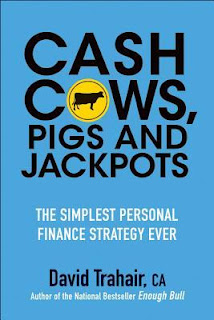
Cash Cows, Pigs and Jackpots: The Simplest Personal Finance Strategy Ever


 I picked up David Trahair's Cash Cows, Pigs and Jackpots: the Simplest Personal Finance Strategy Ever at the library the other day.  It's been awhile since I've read a personal finance book, and this one sounded interesting.  It's also Canadian, which is more relevant for me than American personal finance books, so that was a definite plus.

I thought I'd be in for some fun tales about get rich quick schemes.  Or something more akin to JL Collins' The Simple Path to Wealth.  Instead, Cash Cows, Pigs and Jackpots ended up a fairly basic personal finance book with only one main message: spend less than you make.  While important (but not exactly earth-shattering) advice, that's not really a strategy per se.  I've read other books (that I've liked better - check out some of the other personal finance books I've read) that give more details and strategies on how to pay down your debts, and more fun anecdotes from other people taking control of their finances.

Beyond that, Trahair looks at two important aspects of your personal finance: the question of buying or renting a place to live, and retirement.  I found that the first discussion got bogged down by him walking you through a spreadsheet he made to help you decide on whether renting or buying is better for you (and since I'm not actively interested in that question at the moment, I wasn't really engaged by it).  But I did find the discussion on condos interesting, just in terms of the other fees you need to consider when deciding whether buying one is right for you.

The retirement discussion mainly focussed around CPP and OAS here in Canada.  While I was glad to hear that these are healthy and will be around for awhile (particularly CPP), most of the discussion was tied to the specifics of the "new" rules rolled out around 2012.  Being 10 years out of date at the time of my reading it, I didn't care at all about these specifics, and so lost interest once again.

All in all, I didn't find Cash Cows, Pigs and Jackpots to be a very engaging read.  I would have preferred less focus on the date specific numbers (and honestly less focus on hard numbers in general), and more focus on stories of people (there was one story in chapter four that was really interesting - I would have liked to read more of that in the book!)

Sunday, January 23, 2022

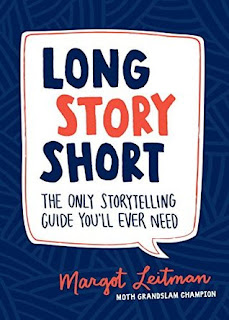
Long Story Short


I bought Long Story Short: the Only Storytelling Guide You'll Ever Need by Margot Leitman last year, during a writing book buying-spree I went on. Apparently I didn't pay too much attention to it though, becauae it's actually a book about oral storytelling rather than writing. But that was okay - I found Leitman's writing super engaging, and some of her principles do translate to writing stories as well.

Long Story Short is a guide on how to tell true stories from your life to an audience, whether that is during a storytelling competition, as part of your work, or even just to a group of friends. Leitman discovered storytelling by accident when she was an aspiring actress in New York. Since then, she's told her stories on national television, won storytelling competitions, and started teaching others how to tell their true stories. While she covers the basics of crafting a story (specifically looking at things like condensing characters, and making sure your story has a beginning, middle, and end), the majority of the book is focussed on either finding your story, or on giving you the confidence to tell your story (and to tell it truly - don't embellish it!) 

Long Story Short is a super quick read (it's also a really cute little book). As I said, I really enjoyed Leitman's writing - you can tell she has a real knack for storytelling! I also liked how it gave great ideas for actually presenting stories - the next time I have to do any sort of presentation, I'll definitely be giving this book another read!

Saturday, November 27, 2021

All About Anne


After finishing The Diary of a Young Girl, I was chatting with a friend and they mentioned flipping through a children's book on Anne Frank that had pictures and more information on the people in her life.  So I went looking at the library and found All About Anne by the Anne Frank House.  It gives a great historical overview of all the events surrounding Anne Frank's life.  I really liked how it even goes into detail on what happened after the diary ends, and how her father dedicated his life to getting her story out there.  I also really liked seeing all the pictures (although I was disappointed that there weren't photos of the other inhabitants of the Secret Annex, just Anne's family). It was a little weird though that this book had different names for everyone from what Anne called them in her diary (for example, the family who lived in the Secret Annex with the Franks were the van Pels according to All About Anne, but Anne named them the Van Daans in The Diary of a Young Girl, though Peter was still Peter in both books).  This mostly wasn't a problem, but I'm now not 100% sure which girl was Lies in The Diary of a Young Girl. 

But all in all, I found this a fantastic supplement to The Diary of a Young Girl, and am very glad to have read it! 

Friday, November 26, 2021

The Diary of a Young Girl


For Remembrance Day this year, I decided to read The Diary of a Young Girl by Anne Frank. My brother and parents read it years ago, bur I was resistant because I thought it would be super depressing. So I wasn't at all prepared for what I found when I started reading: Anne was a superb writer! She was quite funny, and had a real talent for describing what went on around her in the "Secret Annex" where her family and four other people (another family and an elderly doctor) hid for two years before they were discovered by the Gestapo right at the end of the war (the afterword says the Franks were on the very last train in Holland to Auschwitz). 

Anne doesn't just describe the people and life in the Secret Annex; she also spends a lot of time examining her own character, and striving to become a better person. For a young girl (she was 13 when her family went into hiding), she has a remarkably deep understanding of herself and her faults. She admits her failings to Kitty (that's the name she gave her diary), and works hard to right the wrongs she causes. Over the course of the two years, she grows into an independent woman who knows what she wants in life.

As I was reading The Diary of a Young Girl, I was repeatedly struck by the sadness of knowing that the Nazis robbed us of a remarkable writer. Who knows what else she would have written had she lived?

All in all, I really enjoyed The Diary of a Young Girl, and am very glad I chose to read it this Remembrance Day.

Tuesday, October 5, 2021

Unreconciled: Family, Truth and Indigenous Resistance


For September 30th, the very first National Day of Truth and Reconciliation here in Canada, I wanted to read a book that would further my understanding of Indigenous issues here in Canada in some way.  I wasn't sure exactly what I was looking for (and was open to books on everything from culture to residential schools), but while looking over books online I found Jesse Wente's Unreconciled: Family, Truth, and Indigenous Resistance.  It was brand new and already well rated, so I decided that it would be the book I read this year on this day.

I wasn't familiar with Jesse Wente prior to reading this book, which is both his memoir and manifesto, but he is an Indigenous journalist and film critic who has had a very successful career in Canadian media.  In Unreconciled, he talks very frankly about how the residential school system damaged his family, making him and other members of his family feel like outsiders when they visit their family who still live on-res at Serpent River First Nations.  

He also talks at length at how there are so few people of Indigenous descent working in the media.  How Indigenous stories are so often co-opted by white people, put through a white lens and profited off of.  And how people from minorities are often made to speak for their entire group, and how there is tremendous pressure to succeed if you break through into an area because you do not want the door to close for everyone else should you fail.  Or how people of minorities, himself included, can be reduced to tokenism, standing in for their entire group, or, far uglier, being co-opted by institutions and businesses as a kind of endorsement, even if you don't actually endorse what they're selling.

While at times difficult to read, I thoroughly enjoyed Unreconciled. Wente infuses the book with humour while still showing us how Canada as a country has failed, and encouraging us all to do better.  Unreconciled is definitely a book I recommend to all Canadians, for it speaks the truth, which goes hand in hand with reconciliation.